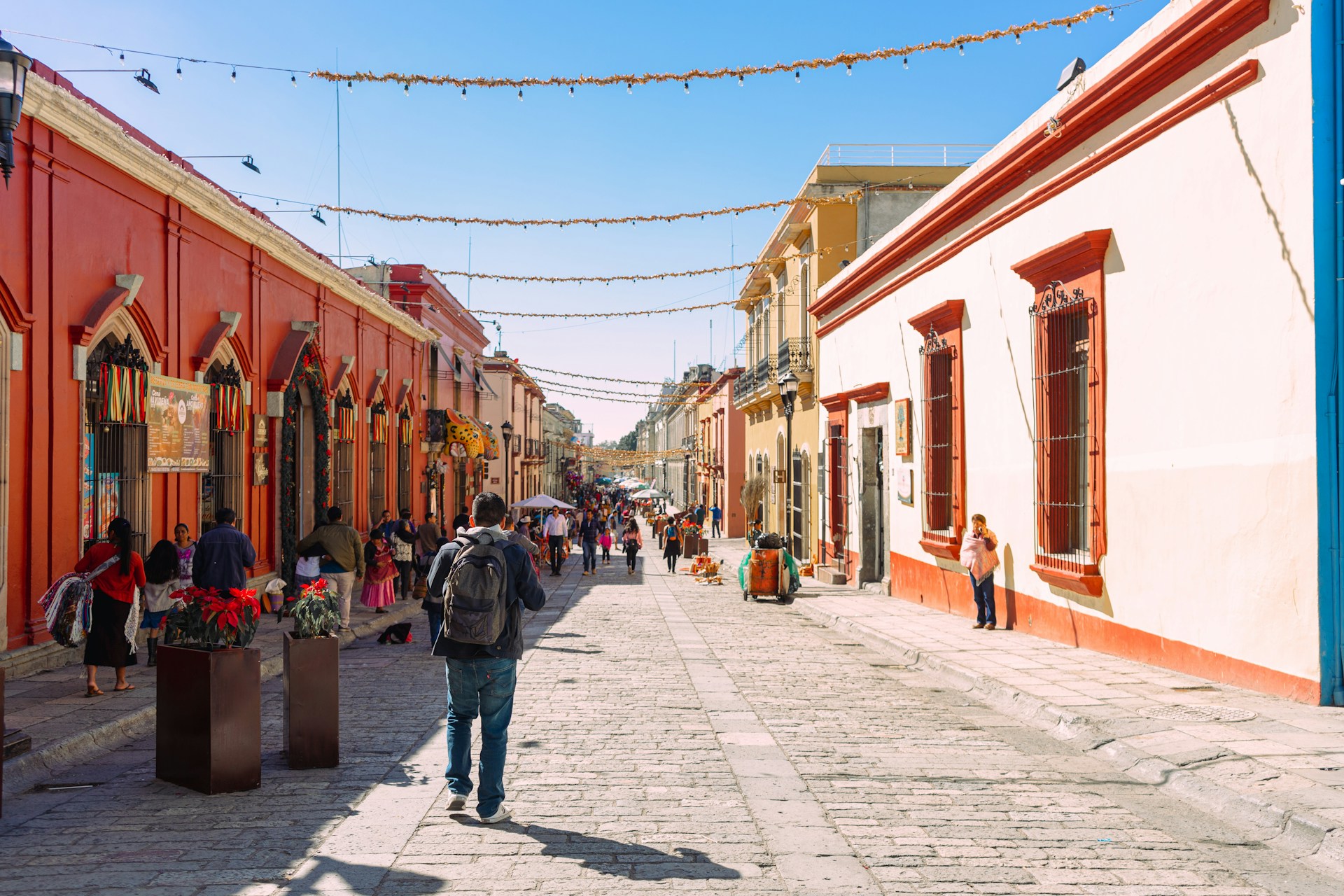
While many travelers flock to Mexico for its turquoise Caribbean waters or the sleek skyscrapers of the north, Oaxaca offers something entirely different. Known as the undisputed cultural capital of Mexico, this is a city where indigenous heritage seamlessly blends with Spanish colonial architecture. Whether visiting for the vibrant, deeply rooted festivals or the sheer thrill of exploring the nation's culinary epicenter, Oaxaca surprises with its rich history, artistic energy, and colorful cobblestone streets.
Must-Visit Landmarks
- Zócalo & Templo de Santo Domingo de Guzmán: The Zócalo is the bustling main square and the heart of daily life. A short walk away is the stunning Templo de Santo Domingo, an exquisite Baroque church featuring a gilded interior and an adjacent former convent that now houses the Museum of Cultures.
- Monte Albán: Located on a flattened hilltop just outside the city, this ancient Zapotec metropolis is one of the most important archaeological sites in Mesoamerica, offering sweeping views of the valley.
- Hierve el Agua: A set of petrified rock formations that resemble cascading waterfalls. Visitors can hike the surrounding trails and take a dip in the natural mineral infinity pools perched on the cliff edge.
- Jardín Etnobotánico de Oaxaca: Tucked behind the Santo Domingo church, this beautifully curated garden tells the story of the region's immense biodiversity and its relationship with the local indigenous communities.
A Paradise for Culture and Art Lovers
Oaxaca is defined by its artisanal heritage and vibrant neighborhoods. The region's indigenous roots are alive in the craftsmanship found just outside the city limits:
- Teotitlán del Valle: A small village famous for its traditional Zapotec rugs, where artisans dye wool using natural ingredients like indigo, marigold, and cochineal bugs.
- San Bartolo Coyotepec: Internationally recognized for its stunning barro negro (black clay) pottery.
- Jalatlaco & Xochimilco: Two of the oldest and most colorful neighborhoods in the city proper, packed with vibrant street art, papel picado fluttering overhead, and quaint cafes.
Culinary Highlights
Oaxaca is widely considered the food capital of Mexico. The local cuisine is incredibly complex and deeply tied to tradition:
- Mole: Known as the "Land of Seven Moles," the region is famous for this rich, complex sauce. Mole Negro, made with chocolate and dozens of spices, is a must-try.
- Tlayudas: Often referred to as Oaxacan pizza, this iconic street food consists of a massive, toasted tortilla smeared with refried beans, quesillo (Oaxaca cheese), lettuce, avocado, and a choice of grilled meats.
- Mezcal: The smoky cousin of tequila, mostly produced in the valleys of Oaxaca. It is traditionally meant to be sipped slowly, often accompanied by orange slices and sal de gusano (agave worm salt).
Travel FAQs: Oaxaca, Mexico
Generally, yes. Oaxaca is widely considered one of the safest regions in Mexico. The main tourist areas like the Centro Histórico, Jalatlaco, and Santo Domingo are very safe to walk around during the day and early evening. Standard travel precautions apply—keep an eye on valuables in crowded markets and use registered taxis at night.
The dry season, running from October to April, offers the most pleasant weather with sunny days and cool nights. For a truly unforgettable experience, visiting during major cultural festivals like Día de Muertos (late October to early November) or the Guelaguetza (July) is highly recommended, though accommodations must be booked months in advance.
English is spoken in major hotels, upscale restaurants, and by tour operators. However, because Oaxaca is a deeply traditional cultural destination, English is less common in the local markets, street food stalls, and surrounding artisan villages. Learning basic Spanish phrases goes a long way.
The historic center is incredibly walkable. For most visitors, walking is the best way to soak in the architecture and street art. For longer trips to the airport or surrounding archaeological sites, local taxis are affordable and abundant. For day trips to artisan villages, booking a tour or hiring a private driver is common.
Oaxaca remains very affordable compared to major U.S. or European cities, and it is significantly cheaper than coastal Mexican resort towns. While there are upscale dining experiences that carry a higher price tag, the city's best meals can often be found in the bustling markets (like Mercado 20 de Noviembre) for just a few dollars.
Conclusion: Why Oaxaca Belongs on the Map
Oaxaca is a city of vivid colors and deep-rooted traditions, where ancient history is still a living, breathing part of daily life. It offers a travel experience that feels deeply authentic—one hour spent exploring ancient Zapotec pyramids and the next savoring a complex mole in a bustling local market.
While it may not have the beaches of the coast or the rapid pace of the capital, Oaxaca provides an unmatched look into the true soul of Mexico. Pack comfortable walking shoes and a serious appetite; the cultural capital of the south is ready to be explored.